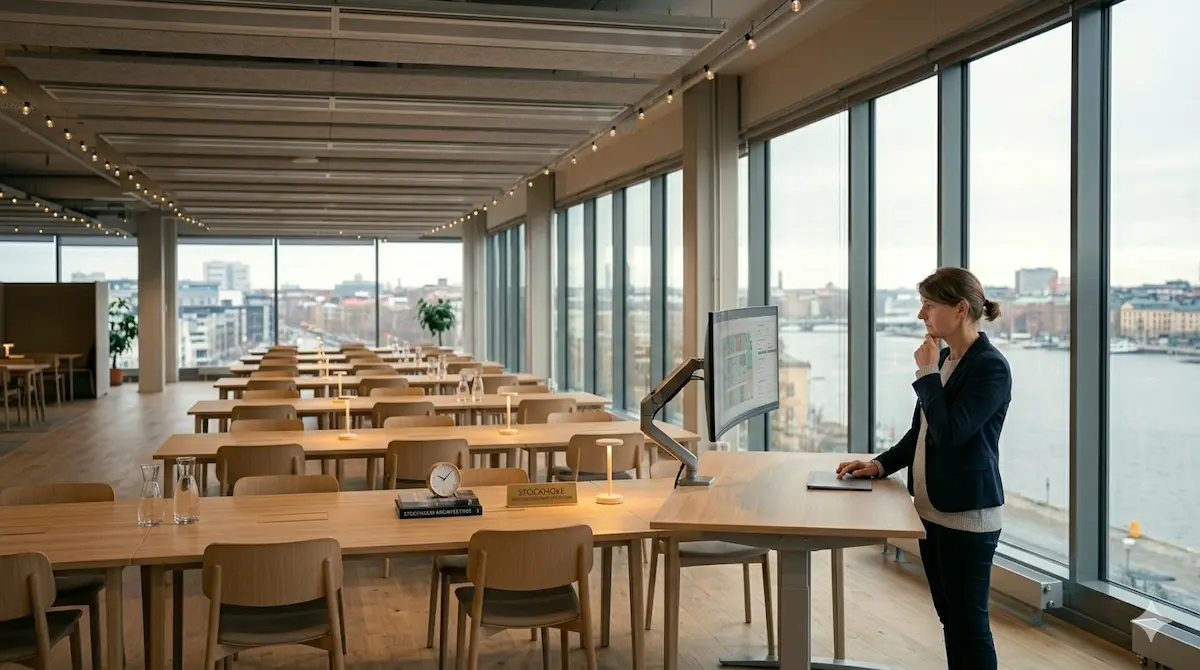
ERP is the hub – but not the whole wheel
Most organisations have an ERP system at the centre of their operations. It handles finance, procurement, production and supply chain with precision. But the backbone is not the whole body.
As someone responsible for property, you know that buildings and technical systems operate on an entirely different timescale to a production order. A heat pump has a lifespan of 15–20 years. An air handling unit requires preventive maintenance every quarter. A fault report about a leaking roof cannot wait until the next accounting period. And an access control system that fails at 2 a.m. is a security issue that exists entirely independently of whether the month-end close is complete.
This is where the property system comes in – not to compete with ERP, but to complement it.
What ERP is not designed for
ERP is a transaction system built around discrete events with short time horizons. Property management works differently: asset cycles spanning decades, maintenance plans covering five to ten years, and an operational day-to-day where fault reports are handled within hours.
ERP’s asset module is a financial tool – it manages depreciation and book value, but it does not know that the air handling unit on the third floor has a filter replacement interval of 90 days and that the next replacement is overdue. That is not a shortcoming – it is a reflection of the fact that the system is designed for something else.
The core value of the property system
A property system manages physical assets over time with traceability at component level. Planned maintenance is the clearest example: every installation is linked to a maintenance plan with intervals, responsible parties and cost forecasts. You see not only what has happened – you see what is going to happen. That gives you a fact-based foundation when presenting the maintenance budget to senior management.
Case report management gains structure: registration, assignment, tracking and closure linked to the correct part of the building. The history reveals patterns – for instance, whether a lift has been reported six times in six months and should be replaced rather than repaired again.
Integration creates synergy
The real value emerges when the systems talk to each other. A completed work order in the property system automatically creates the correct transaction in ERP – with the right cost centre and account number, without manual input. Supplier data is retrieved from ERP rather than maintained in parallel. And the cost forecasts from maintenance plans provide a fact-based foundation for the investment budget.
Conclusion
ERP and the property system are designed around fundamentally different logics. Together, they create a digital infrastructure that reflects the true complexity of your organisation – and gives the property team tools that actually understand your business.


