Large organisations are constantly restructuring. Departments merge, premises change hands and responsibilities shift – sometimes several times a year. For you as a controller or finance manager supporting property management, every change means months of manual work, inaccurate cost allocations and a budget that no longer reflects reality.
A move takes a day. The cost allocation takes a year.
The decision to relocate a department is made in a meeting. But updating how costs are distributed is a different matter entirely.
In many organisations, cost allocation for premises and property is carried out once a year. That means if a department moves in March, it can end up carrying the wrong costs all the way to the next financial year – whilst the department that took over the space may not be paying anything at all. That is not reasonable. But it is common.
The problem is not with you – it is in the structure
It is not a lack of competence that makes cost allocation complicated. It is the way information is organised.
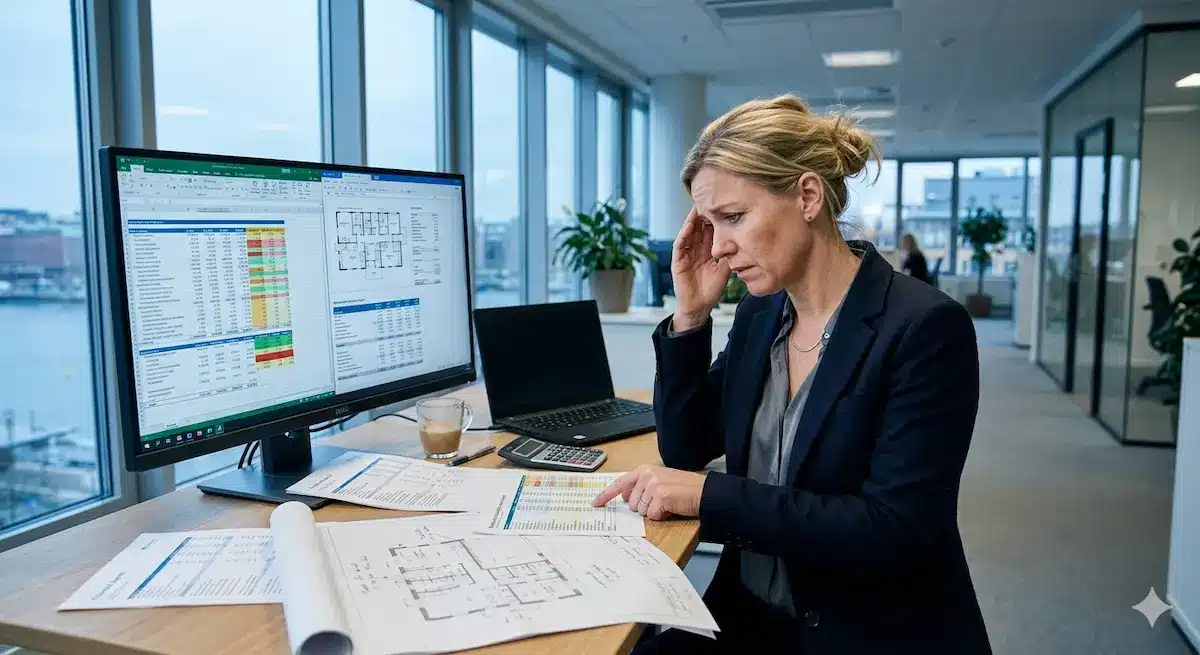
Property data sits in one place. Financial data in another. Lease agreements in a folder. Floor area information in a spreadsheet last updated three years ago. When the organisation changes, there is no automatic link between what is happening on the ground and the cost system. You are forced to chase information manually, interpret data from multiple sources and hope that everything adds up when you finally settle on the allocation key.
Forecasts and scenarios – straightforward in theory, impossible in practice
What would it cost to expand in building A? What happens to costs if we give up space in location B? If the underlying data on premises, floor areas and contracts is hard to access or out of date, that kind of analysis cannot be done with any reasonable degree of precision. Scenarios are built on assumptions rather than facts – and when those assumptions are uncertain, many simply choose not to run them at all.
That is a hidden cost. Not as a clear line in the budget, but in the form of poorer decisions and missed opportunities for optimisation.
Complexity is increasing – not decreasing
Sustainability requirements, energy reporting and frequent reorganisations mean that the need for accurate and up-to-date property data is only growing. Cost allocation carried out once a year, based on static keys and manual inputs, is no longer sufficient.
The question is not whether you need a better way of working. The question is when you decide to do something about it.