In many organizations, the handling of fault reports is still more reactive than it should be. Cases arrive via email, phone calls, or at best a form – and then a manual puzzle begins to get the right person to act.
The result? Missed cases, unnecessary delays, and an organization that struggles to work proactively.
A well-functioning workflow for fault reporting, action, and follow-up instead creates structure, transparency, and control. Here we walk through what such a workflow actually looks like in practice.
What characterises a good workflow?
An effective workflow is not just about “receiving and resolving faults”. It is about creating a cohesive process where every step is connected.
A good workflow is:
Traceable – every case can be followed from start to finish- Clear – responsibility and next steps are always defined
- Efficient – the right information and the right person from the start
- Transparent – the person who reported the fault knows what is happening
- Measurable – it is possible to follow up and improve
When these elements are in place, the work not only becomes more efficient – it also becomes easier to develop over time.
Step 1: Simple and accessible fault reporting
Everything starts with how easy it is to submit a fault report.
If the threshold is high, you risk receiving incomplete information – or no cases at all until the problems have become critical.
A good first step means:
- That fault reports can be submitted via multiple channels (e.g. a portal, mobile, or QR code)
- That the right information is collected upfront (category, description, images)
- That the reporter receives an automatic confirmation
The better the information from the start, the faster and more accurately you can act.
Step 2: Smart case management and prioritisation
Once the case has been logged, the next step is crucial: that it ends up in the right place straight away.
This is where many organizations fall back into manual handling, which creates bottlenecks.
An effective workflow instead means:
- Automatic categorisation of cases
- Clear prioritisation rules (urgent, planned, low priority)
- Automatic assignment to the right person or role
This reduces lead times and ensures that the right expertise is brought in from the start.
Step 3: Efficient action
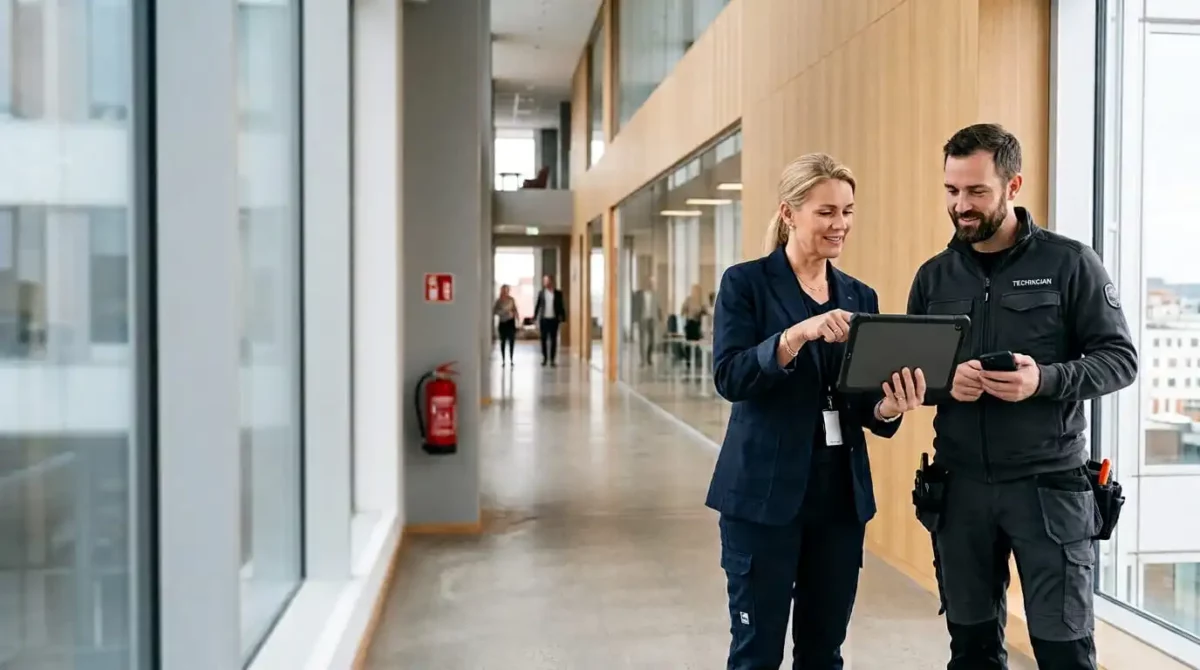
When the action is to be carried out, technicians or those responsible need the right conditions.
It is not just about “fixing the fault” – but about doing so efficiently and in a documented manner.
A good way of working includes:
- Clear work orders with all relevant information
- Mobile access to cases in the field
- The ability to document directly (images, materials, time)
This creates both quality in the execution and valuable data for the future.
Step 4: Feedback to the reporter
A common source of frustration is a lack of feedback.
Has someone received the case? When will it be resolved? Is it done?
In a well-functioning workflow, feedback happens automatically:
- Status updates throughout the process
- Clear information when changes occur
- Confirmation when the case is closed
Transparency builds trust – and reduces the number of follow-up queries.
Step 5: Follow-up and analysis
It is only when you follow up that you can start working proactively.
A structured workflow provides access to data that would otherwise be lost:
- Lead times by case type
- Recurring faults
- Workload over time
With the right follow-up, you can identify patterns, address root causes, and plan maintenance instead of simply reacting to problems.
Common pitfalls to avoid
Many organizations have parts of a functioning workflow – but miss the bigger picture.
Common challenges are:
- Unclear processes and responsibilities
- Manual handling that creates dependencies
- Lack of follow-up
- Systems that are not connected
The result is often inefficiency despite good intentions.
How to create a functioning workflow in practice
Improving your way of working does not have to be complex – but it does require structure.
A few key steps:
- Standardise how cases are handled
- Ensure that the right system support is in place
- Create clarity in roles and responsibilities
- Start simple and improve continuously
The most important thing is to have a workflow that is actually used in everyday practice.
From reactive to proactive property management
When fault reporting, action, and follow-up are connected, entirely new possibilities emerge.
You move from putting out fires – to working preventatively.
From lacking overview – to having control.
From dissatisfaction – to trust.
A structured workflow is not just an efficiency improvement. It is a prerequisite for modern, data-driven property management.
Summary: How to get your workflow right
A well-functioning workflow for fault reporting, action, and follow-up is fundamentally about three things: structure, clarity, and follow-up.
By:
- making it easy to report faults
- ensuring that cases are routed correctly straight away
- providing the right conditions for action work
- creating transparency through feedback
- and working actively with follow-up
…you create a workflow that not only resolves problems – but also prevents them.
The result is a more efficient organization, better control over the properties, and a clearer foundation for working proactively.
Contact us if you would like to know more about how Pythagoras property management system handles fault reporting.